| A role that can recommend but not commit |
Separating analysis and recommendation from sovereign commitment. |
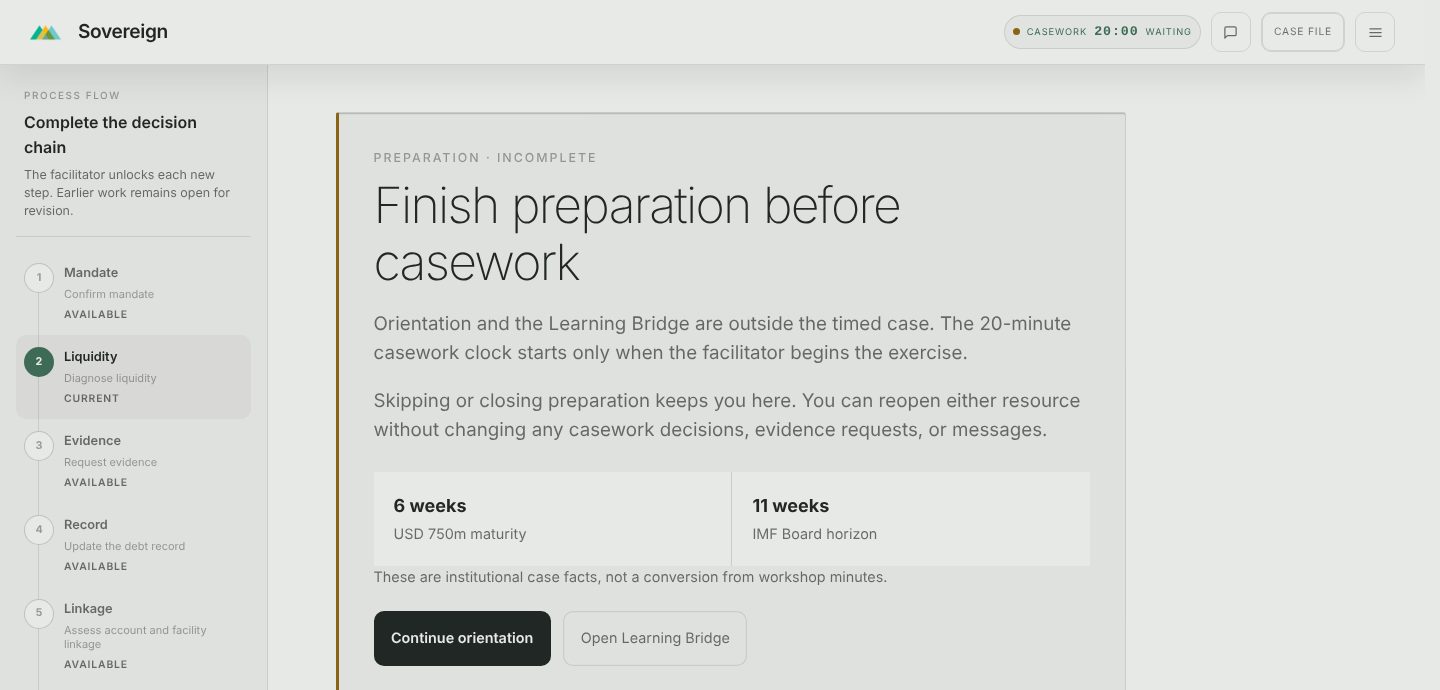
The Debt Management Office holds the loan agreements and claims record, but not the cash position, the legal reading or the authority to release anything externally. |
| A balance that isn’t what it seems |
Distinguishing reported cash from usable liquidity. |
Reported liquidity is $780m. Once the evidence is in, $240m is restricted and $60m protected, leaving $480m usable. |
| Evidence that arrives late |
Prioritising requests by the decision they serve. |
Requests return after delays, so requested evidence is not yet available evidence. |
| Two claims, kept apart |
Not letting a legal label stand in for operational fact. |
Copper-export receipts flow into a restricted account and are swept for debt service. Whether two loan facilities share a dependency is a separate question. |
| Disclosure within limits |
Setting a boundary between transparency and confidentiality. |
Legal allows a redacted functional summary. Full contract text needs consent. |
| Unlock by discussion, not by clock |
Keeping the room on reasoning, not pace. |
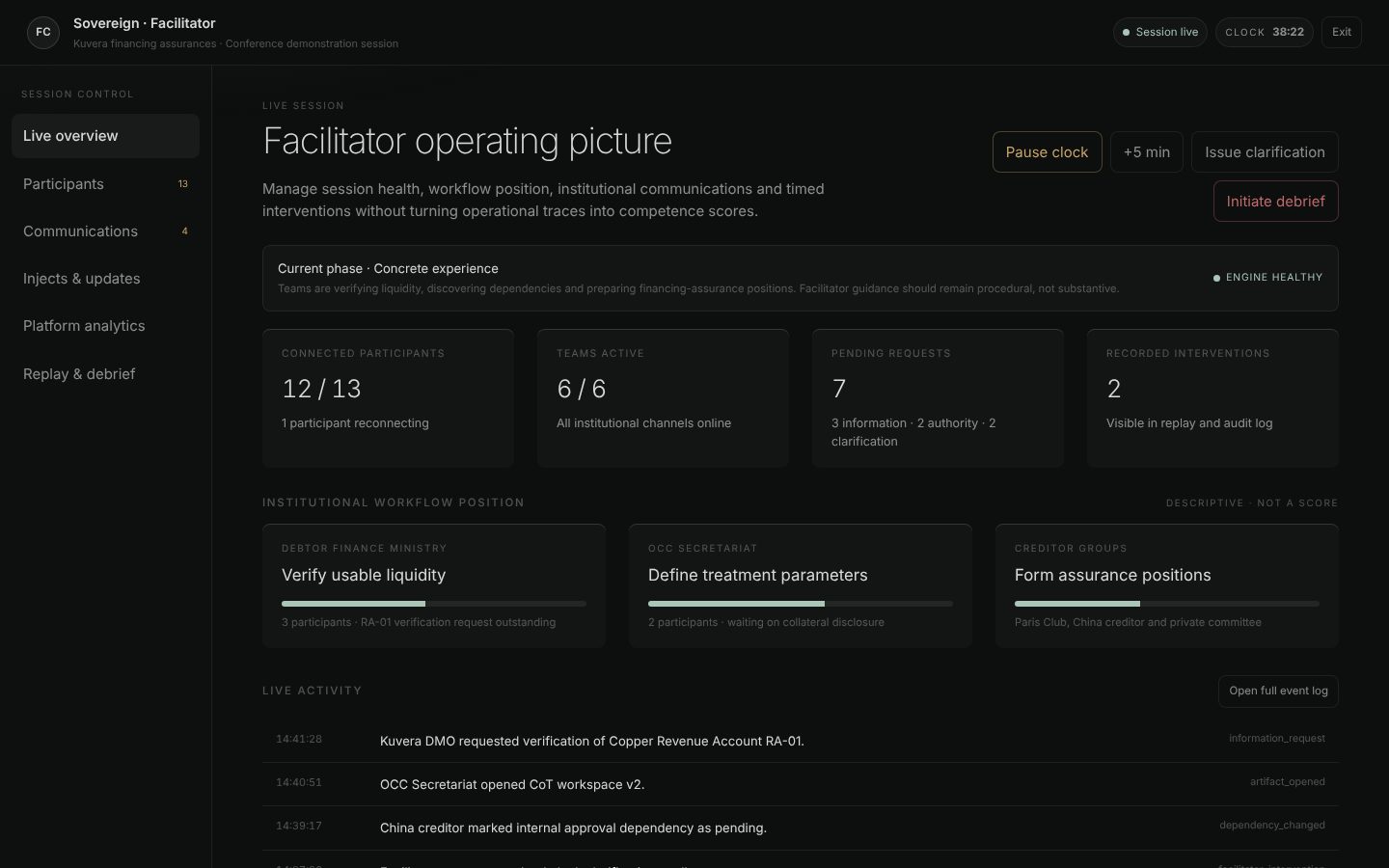
Each stage card gives the facilitator a purpose, an opening question, cues to listen for and an unlock condition. |
| Immutable submissions |
Honest reconstruction instead of hindsight. |
The debrief works from the version each participant actually submitted. |
| Deterministic consequences |
Discussing causes without pretending to predict. |
Consequences are fictional and rule-based, and the debrief says plainly that they are neither a forecast nor a competence score. |