The challenge
Identity economics is easy to state and hard to feel. Undergraduates can repeat that race, class, caste and gender shape access to resources without ever experiencing how that plays out over time.
An educational board game for an undergraduate economics course. Players build a life through four forms of capital, while their identity quietly shapes what each of them can reach.
← Explore all projects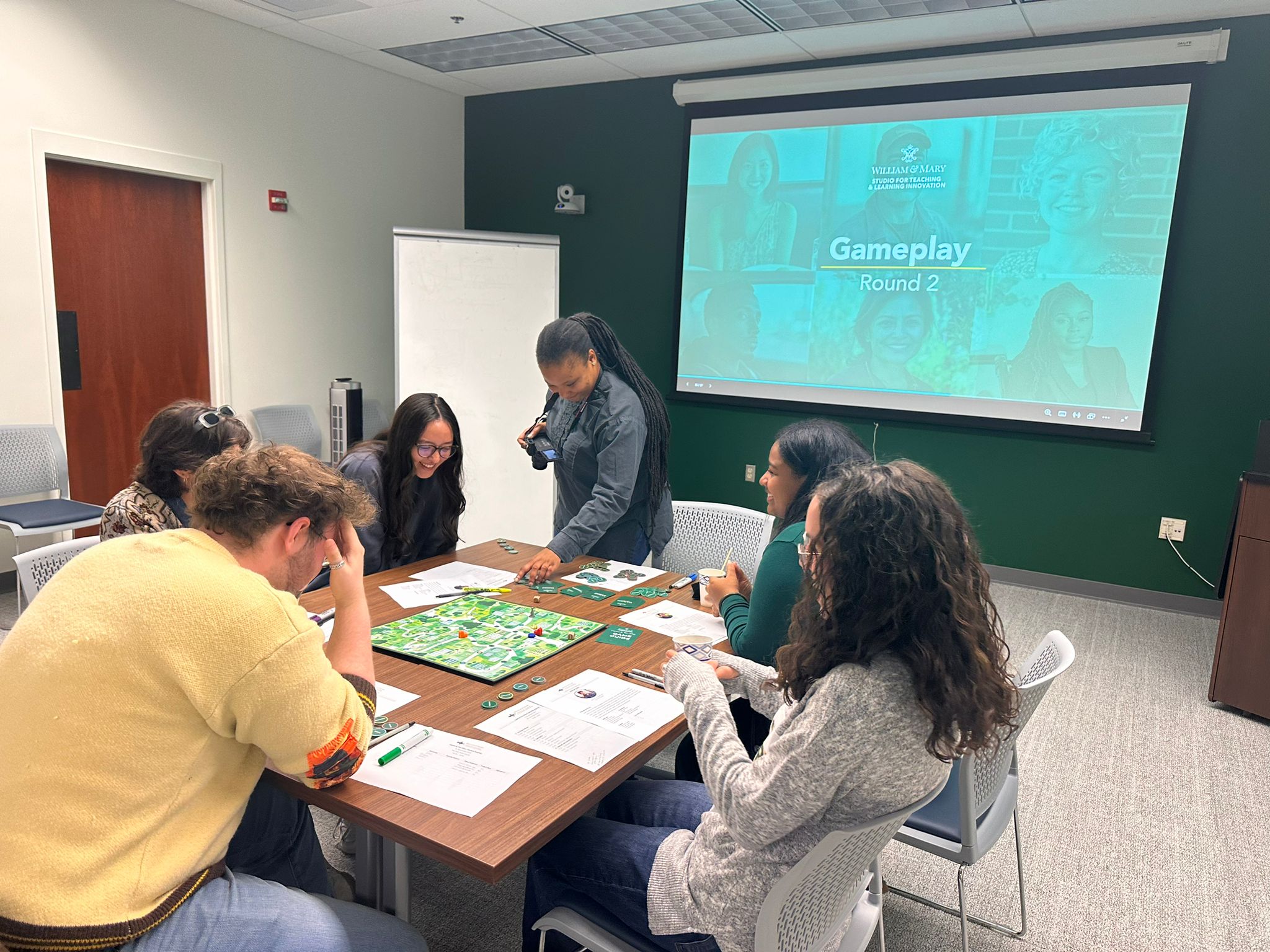
Identity economics is easy to state and hard to feel. Undergraduates can repeat that race, class, caste and gender shape access to resources without ever experiencing how that plays out over time.
Map the module’s threshold concepts to game mechanics before designing any components. Then give every player a profile with a different identity and different starting capital, so structural differences show up in play rather than in a lecture.
Decisions on the board, written reflections during play, and a facilitated debrief that connects what happened at the table to the course concepts.
I designed the game and its evaluation, ran the playtest and wrote the project report that set the next iteration.
Money and assets: what most people mean by capital, and the easiest to see.
Networks and relationships that open doors.
Knowledge of norms, language and cultural fluency in the settings that matter.
Education and skills, and the time and money it takes to build them.
Pre-, mid- and post-game surveys and observation notes pointed to specific changes for the next version.
All five playtesters named interacting with other players as the most engaging part of play.
Four of five rated recording reflection prompts the least engaging part, though it was the most deliberate learning mechanism. Next version: move reflection into the debrief.
Was success the most capital, or the deepest understanding? The tension sparked discussion but needs an explicit answer at larger scale.
Players wanted identity to restrict access, not just starting values. Next version: identity-based limits on certain board spaces and cards.
Next version: financial capital takes more tokens for the same impact, closer to how economic hierarchies actually work.
Next version: profiles with explicit objectives, and tighter links between a player’s background and how they gain capital.
The game makes players live through the course concepts rather than recall them.
| Decision | What it trains | In the game |
|---|---|---|
| Identity as a structural variable | Seeing how identity shapes access to opportunity. | Each profile fixes identity attributes and starting capital before the first turn. |
| Four capitals, not one | Distinguishing financial, social, cultural and human capital. | Players track all four on their profile sheet as the game goes on. |
| Concepts first, components second | Keeping every mechanic tied to a learning outcome. | The module’s threshold concepts were mapped to mechanics before any physical components were designed. |
| One shared table | Learning through negotiation with other players. | Players interact on one board with shared cards and tokens. In the playtest this was the most engaging element. |
| A reflection phase | Noticing what the game is showing, not just playing it. | Players record reflection prompts during play. The playtest suggests moving this into the debrief. |
| Physical, not digital | Embodied, social play. | Board, cards, tokens and profile sheets. All five playtesters preferred the physical format. |
Five students playtested the game with pre-, mid- and post-game surveys, plus observation notes. Across the core concepts, the share of self-ratings at “strong understanding” rose from 23% before the game to 50% after. All five rated the experience excellent.
Five participants, all of whom had already completed the course, so the playtest was a return to familiar material rather than a first encounter. That may have lifted engagement. The gains are self-reported; content assessments would be needed to show measurable learning.
Project report, methodology and design toolkit
William & Mary Teaching & Learning Symposium, 2025
Capital & The Other on video
Learning strategy, institutional systems and decision practice.